
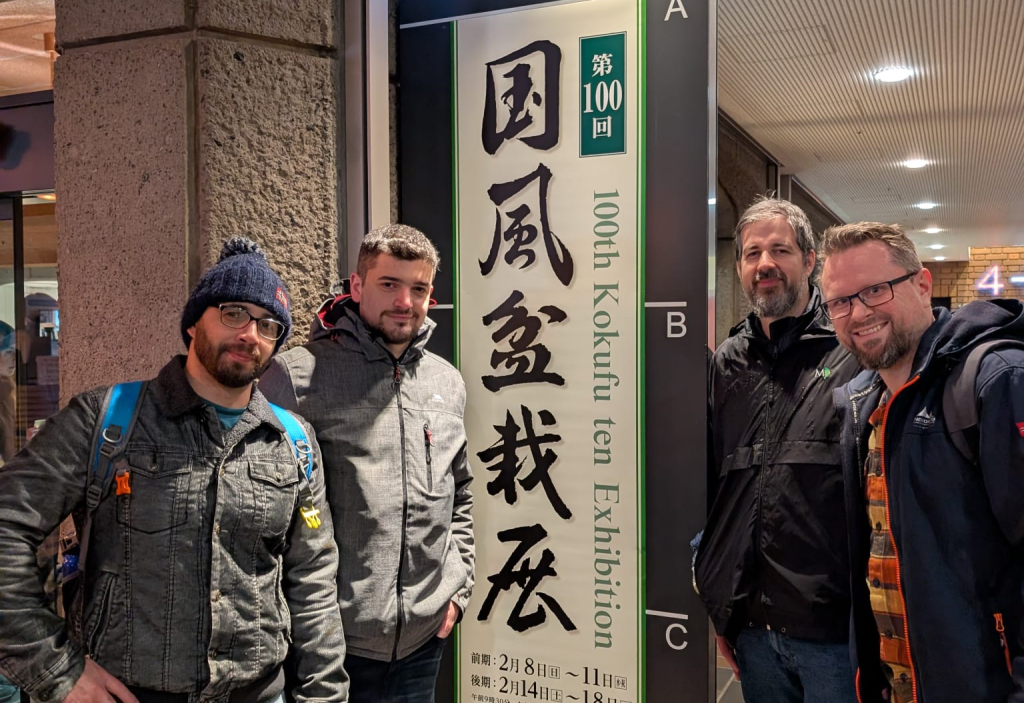
The three of us flew out to Tokyo on 5th Feb, with a 3AM start, and picked up a 4th (Svens colleague) in Frankfurt. Arrived in Tokyo at about 11am, and after resolving an issue with a misplaced bag, found ourselves in a quiet guest house 10 minutes from Ueno Park by early afternoon. We sampled the local food and liquor in an Izakaya – a social setting with small plates of food and drink.
On day two, we visited some shops and arcades in Akihabara, and the giant flea market at Tokyo racecourse. After enjoying daytime temperatures of 15 Celsius on day one, the weather changed and we saw overnight snow flutters throughout the day with more predicted overnight. We were surprised to see hundreds of traders, and not really anything relating to bonsai.
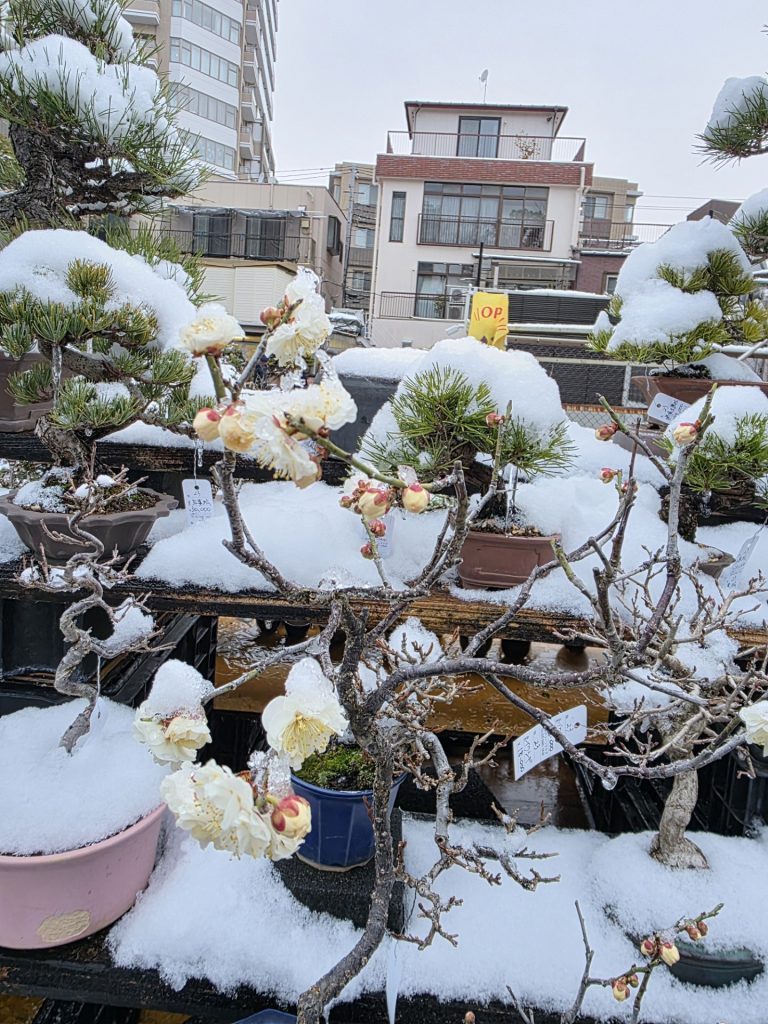
Day three was the opening day of the 100th Kokufu Ten and we took the morning to view half the exhibition before retiring to a Sake and street food festival that conveniently happened to be in Ueno Park on the same day. The show comprises two parts with a break in between, and a change of trees for the second part. With full bellies and some samples of warm sake to fend off the snowy weather, we returned to soak in the bonsai masterpieces. Initial impressions were that the trees were of such quality, and with but a few examples of trees which felt incomplete, that the many trees felt like “just another masterpiece black pine”. They could have benefitted from some of our sticks in pots to ground expectations 🤣. Many of the apricot and plum trees were highlights for us with spectacularly craggy bark and beautiful flowers. A particular Hinoki forest was also very popular.
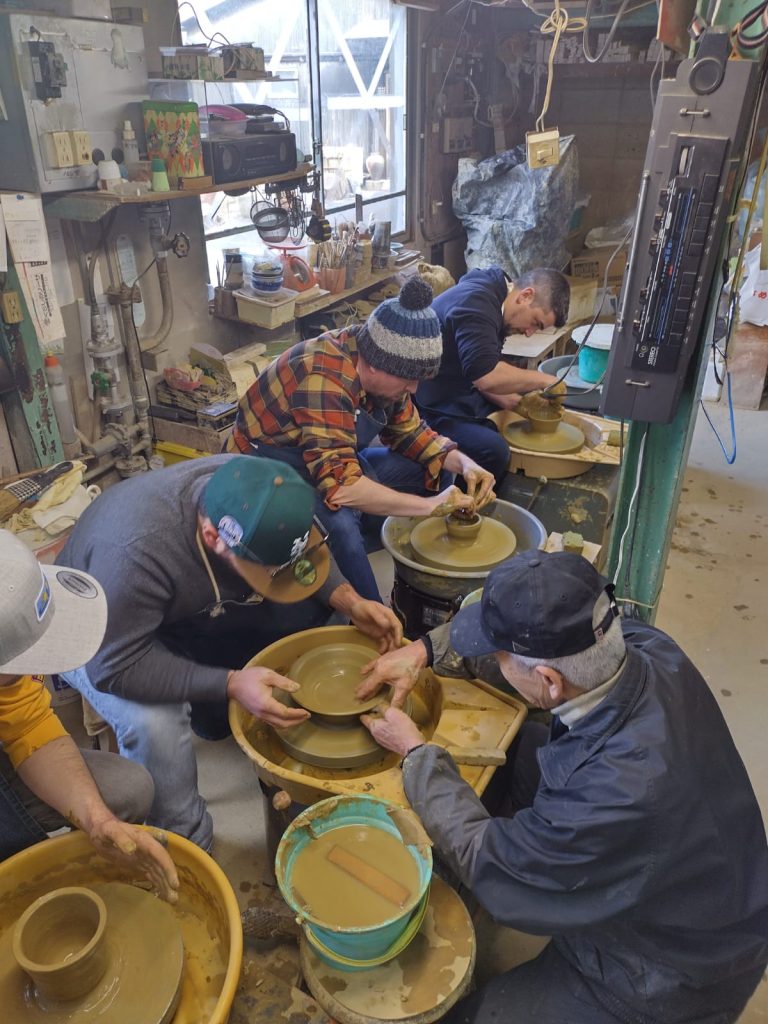
From there, we took the bus to Nagoya, and our planned trip to Tokoname. Stop one was a ceramics outlet which stocks wares from many Tokoname potters. We duly stocked up on the great value pots. Given there’s no possibility of bringing trees home, pots were high on our radar, and if we had to sacrifice some of the clothes we’d brought with us, so be it. The owners of the shop were very gracious and dropped us off at out next stop, lunch! Then off to a local pottery where we tried our hands at throwing our own pots, of varying levels of ambition! They also had a selection of antique teapots from the 70s of which we were happy to purchase a few as gifts.
From there, we’ve visited rural farmhouses, had meals in traditional dining halls, slept in a monastery, visited temples in the mountains, and walked beneath abandoned farm terraces overrun with enormous cedars.
After touring Kyoto, including the bamboo forest at Arashiyama and meeting up with David Cheshire and a couple of his tour guests, we visited Osaka, sampled A5 Wagyu, and took a bullet train back to Tokyo for part 2 of the Kokufu Ten. The trees on display were just as spectacular as in part one, though we were left wondering whether the lighting couldn’t have been better for the shohin and mame trees.
The following day, we visited Omiya bonsai village, an establishment from 1925 where Bonsai practitioners moved out from the city to the suburbs of Saitama. To move there, residents must have 10 bonsai trees and open their gardens to the public. Though the rule has since been dropped, and most of the 35 gardens that were originally set up have closed, 6 nurseries remain and they were among the most moving experiences we had in Japan. Toju-en in particular was a beautiful highlight, with exquisite landscaping complementing an array of trees worthy of the Kokufu in their own right.
The bonsai museum in Omiya was also well worth a visit.
We spent a day touring popular scenic areas around Mount Fuji, and stocked up on Souvenirs before heading back so a gloomy Heathrow. Back to reality, but with plenty of memories and inspiration to show for it!
Back just in time to begin repotting.
Copyright © Redditch Bonsai Society 2026